


Jun 22, 2026
How to Read Kidswear Labels Like a Smart Parent
We have all been there. You are scrolling online or browsing a boutique, and you spot it: the most adorable children’s outfit. The color is perfect, the design is trendy, and the price fits your budget. Into the cart it goes!
But a few weeks later, that beautiful outfit is sitting at the bottom of the closet. Why? Because your child complains it is "too itchy," or they break into a sweat within five minutes of putting it on.
As parents, we naturally check the design, color, and price tag first. But the most important part of any garment is actually the smallest: that tiny tag stitched into the seam. In kidswear, what is written on the inside matters infinitely more than how it looks on the outside. Learning how to read kids' clothing labels is the ultimate parenting hack to save money, avoid tantrums, and protect your child's skin.
Why Kidswear Labels Matter More Than Adult Clothing
Adults are willing to suffer for fashion. We will tolerate a stiff, synthetic shirt if the outfit looks sleek. Kids don't have that filter, and biologically, their bodies can't handle it.
A child’s skin is up to 30% thinner than ours. Its protective outer barrier is delicate and highly permeable, meaning harsh dyes and rough fibers irritate much faster. Combine that with the fact that children are tiny, active heat engines, constantly running and sweating, and the stakes get much higher.
When synthetic fabric rubs against a sweaty toddler, it acts like sandpaper. It locks in body heat and traps moisture against the skin, triggering sudden friction rashes and eczema flare-ups.
This is why checking clothing label tags matters so much more for children. An adult tag is just a laundry guide. A child's tag is a warning system. If you want to find truly skin friendly kids clothing, you have to look past the style on the hanger. The tag inside tells you exactly how much heat and friction you are introducing to your child's day before they even put the outfit on.
How to Read Kids Clothing Labels
1) The First Thing to Check: Fabric Composition
When you flip over clothing labels, skip the brand logo and go straight for the math. You are looking for a complete percentage breakdown. This numbers game is the absolute foundation of finding true comfort fabric for baby clothes and toddlers.
The Gold Standard: 100% Cotton
If the tag reads 100% cotton, you are usually safe. Cotton is widely considered the best fabric for kids clothing because it is a natural, hollow fiber. It acts like a built-in exhaust system, pulling moisture away from the skin and letting air circulate freely so your child stays cool.
The Red Flags: High Synthetics
If you see high percentages of polyester, nylon, or acrylic, proceed with caution. Synthetic-heavy fabrics are essentially woven plastic. They do not breathe. Instead of absorbing sweat, they lock it in, turning a sunny afternoon into a humid, itchy nightmare for your kid.
2) Understanding Common Fabric Terms on Labels
The language on clothing label tags can feel like a riddle. Brands often use poetic wording to mask cheap materials, but if you want to find genuinely skin friendly kids clothing, you need to know exactly what these terms translate to in real-world wear.
- Cotton: The ultimate baseline. It is natural, highly breathable, and gets softer with every wash.
- Organic Cotton: Grown without toxic pesticides. Because it undergoes far fewer harsh chemical processing treatments, it is noticeably gentler on highly sensitive or eczema-prone skin.
- Polyester: A synthetic fiber made from petroleum. It is incredibly tough and resists wrinkling, but it has zero breathability. It acts like an insulator, trapping heat and sweat against your child’s skin.
- Elastane / Spandex: A synthetic stretch fiber. You don't want a garment made entirely out of this, but a tiny amount (2% to 5%) is actually highly beneficial for active toddlers because it allows clothes to move with them without losing their shape.
- Viscose / Rayon: A semi-synthetic fiber made from chemically treated wood pulp. It feels silky and cool to the touch, but it absorbs moisture poorly and can become stiff or misshapen after a few cycles in the wash.
3) Why Fabric Blends Can Be Confusing
The phrase "cotton blend" is a favorite tool of retail marketers. It sounds natural, safe, and inherently breathable. But in reality, it is a massive umbrella term often designed to stop you from looking closer at the actual kids clothing labels.
Blends are not inherently bad. In fact, combining different fibers can sometimes create a superior fabric that handles the chaotic wear-and-tear of childhood better than a pure fiber could. However, a blend can also be a cheap shortcut to lower production costs. It all depends on which side of the scale the percentages fall.
The Two Faces of Fabric Blends
|
Fabric Blend Ratio |
Real-World Performance |
The Parent Verdict |
|
High Natural / Low Synthetic (e.g., 95% Cotton / 5% Elastane) |
Improves softness, gives the outfit flexibility, and allows the garment to hold its shape through countless laundry cycles without losing breathability. |
Smart Buy. Perfect for active toddlers who need to move freely. |
|
Low Natural / High Synthetic (e.g., 30% Cotton / 70% Polyester) |
Dramatically increases heat retention. It traps sweat against the skin, pills easily in the wash, and creates a humid environment that triggers heat rashes. |
Avoid. The tiny drop of cotton is only there so the brand can use the word on the display sign. |
Parent Tip: Never trust the front of the package wording alone. Always turn the garment inside out and verify the exact percentage numbers on the inner tag.
4) The Hidden Clue: Fabric Weight and Thickness
There is a subtle trap in the kidswear boutique that catches almost every parent off guard: the "plush softness" illusion. We naturally gravitate toward thick, densely woven knits because they feel incredibly soft and premium to our touch on the hanger. But a label cannot tell you how a fabric actually breathes; for that, you have to look at the weight.
Fabric weight is the ultimate invisible indicator of how much heat an outfit will retain. Even if a garment is made of 100% pure cotton, if the weave is too thick and heavy, it changes how the clothing performs:
- Heavier Fabrics: Densely packed, heavy yarns create a thick thermal barrier. They lock your child’s body heat inside the garment, creating a stagnant layer of warm air right next to their skin.
- Lightweight Fabrics: Loosely or finely spun yarns allow for immediate, continuous airflow. They let your child's natural body heat rise and escape, keeping their skin fresh and dry.
5) Care Instructions Tell You More Than You Think
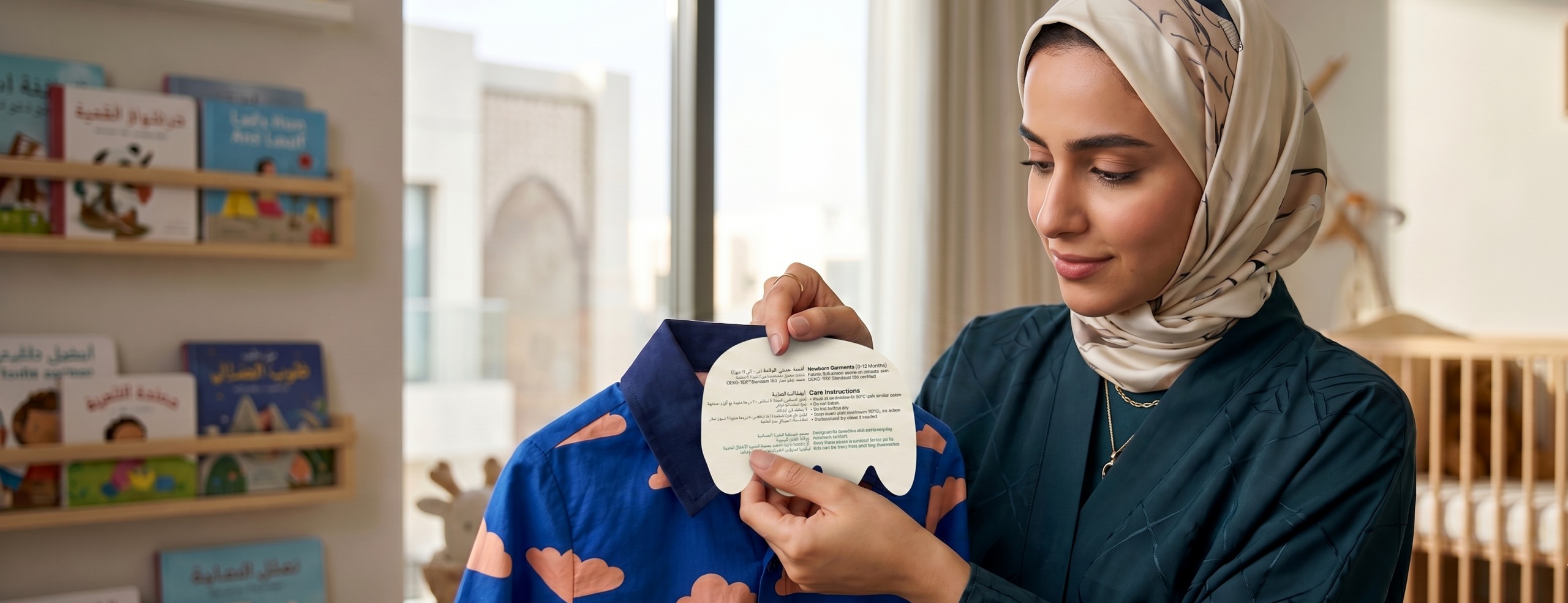
The care label is essentially the manufacturer’s secret confession page. While the flashy cardboard tags on the front of the hanger use poetic marketing words to convince you a garment is pure luxury, the tiny fabric tags stitched inside are legally bound to tell you the raw truth about what you are actually buying.
If a brand claims an outfit is made of the ultimate comfort, but the inner label demands a laundry routine that looks complex, that fabric isn't built for a child's life. Strict washing restrictions are a quiet admission that the material is fragile, highly unstable, or heavily coated in synthetic finishes that won't survive a real mess.
Translating the Hidden Warnings
When you look past the tiny symbols, the care instructions reveal exactly how a garment will behave long after you leave the store:
- "Machine Washable" means it's ready for the playground. This is the baseline for stress-free parenting. If fibers can handle the aggressive spinning of a standard wash cycle, it means they are naturally resilient, structurally sound, and built to take a beating without falling apart.
- "Hand Wash Only" means it's too fragile for a child. Kids do not live life in slow motion; they crawl, spill, and roll in the dirt. An outfit that requires you to scrub it by hand in a sink isn't just a time-sink; it is a clear sign that the fabric is too weak to handle regular childhood friction.
- "Do Not Tumble Dry" is a warning about hidden sensitivity. This restriction usually means the fibers are highly vulnerable to heat. Tossing it into a dryer will likely cause the garment to warp, pill instantly, or shrink down into a doll-sized shirt.
A smart parent knows that real skin friendly kids clothing doesn't require a delicate touch in the laundry room. If a garment can't survive a basic trip through your home appliances, it has no business being in an active child's wardrobe.
6. Safety Labels: What They Actually Mean
Don't trust the vague "eco-friendly" buzzwords on a clothing hanger. For real peace of mind, flip the garment inside out and read the actual certifications on the clothing label tags. These independent testing symbols are legal proof that the fabric is safe for your child.
The Quick Safety Checklist
When scanning kids clothing labels, look for these specific safety markers:
- Non-Toxic Dyes (OEKO-TEX Standard 100): This is the gold standard for skin friendly kids clothing. It proves that every thread, button, and zipper is completely free from harmful chemicals, heavy metals, and irritating factory dyes.
- Flame Resistance: In many regions, loose sleepwear must be treated with chemical flame retardants. If you want to avoid these extra chemicals, look for clothing label tags that state "Must fit snugly; not flame resistant" so you can choose untreated, tight-fitting cotton instead.
- Certified Fabrics (GOTS): Look for the Global Organic Textile Standard (GOTS) logo. This is your independent guarantee that the material is genuinely organic and free from toxic manufacturing processing.
- Avoid Unverified Claims: Ignore generic phrases like "all-natural" or "pure" if there is no official certification logo next to them. Anyone can print a slogan, but true comfort fabric for baby clothes requires independent proof.
7. Country of Origin & Quality Clues
The "Made in..." line on a tag is often the most overlooked piece of information, but it can provide excellent insight into how a garment was constructed. While global manufacturing has evolved significantly, different production regions still operate under entirely different manufacturing standards and quality control laws.
However, a smart parent knows that a country name alone doesn't guarantee a great outfit. The real trick is using the country of origin as a starting clue, then verifying it against the actual fabric details.
Reading the Origin Clues
When scanning the manufacturing details on kids clothing labels, keep these practical quality indicators in mind:
- Varying Manufacturing Standards: Different regions specialize in different textile strengths. For example, garments produced in the European Union, Portugal, or Peru often follow exceptionally strict quality checks regarding environmental impacts and fabric finishing. Meanwhile, major textile hubs in India and Bangladesh are world leaders in high-quality, durable organic cotton farming.
- Stricter Quality Checks: Some countries enforce rigorous local laws regarding garment safety, stitch strength, and chemical usage in factories. When a brand utilizes trusted production hubs known for high standards, you are far less likely to deal with loose threads, shrinking, or fading colors after the first wash.
- The Composition Test: Never buy an outfit based on the country name alone. A garment made in a high-end production region is still a poor choice if the clothing label tags reveal it is made of 100% heat-trapping polyester. Stricter regional standards only matter if the raw material itself is good.
How Loopa Keeps Fabric Transparency Simple for Parents
At Loopa, fabric transparency is kept simple, honest, and parent-friendly so you never have to guess what your child is wearing. Every product is designed with a comfort first approach, focusing on clear fabric choices that make everyday dressing easier and safer for kids.
- Clear, breathable fabric choices that prioritize airflow and reduce heat buildup
- Comfort-first materials selected specifically for children’s sensitive skin and active routines
- Designed for hot weather realities, ensuring kids stay cool and comfortable throughout the day
- Simple, honest product composition so parents always know exactly what they are buying
- Clothing made for real everyday wear, not just occasional or styled use
- No scratchy inner labels, ensuring irritation-free comfort for long hours of wear
- Online detailed information available, helping parents make informed decisions before purchase
With this approach, Loopa ensures that parents don’t just buy clothing, they understand it. Every piece is created to support comfort, transparency, and confidence in everyday kidswear choices.
Conclusion
Taking just a few seconds to check the clothing label tags before you buy can save your child from days of itchy skin irritation and save you from major laundry frustration. While the front of a clothing hanger uses clever marketing words to sell an outfit, the inner kids clothing labels are legally required to tell you the absolute truth about the fabric quality. Checking these tags is a simple, highly effective parenting tool that cuts through the retail noise.
Ultimately, making better material choices means happier, more comfortable kids who can play without distraction. True comfort and safety have nothing to do with expensive boutique logos or flashy branding. By learning how to read clothing labels, you can easily spot genuine comfort fabric for baby clothes and secure the best skin friendly kids clothing for your little ones. Smart shopping always starts with smart label reading!
FAQs
1. At what age should parents start paying attention to kidswear fabric labels?
Parents should start checking clothing labels from newborn stage itself, as baby skin is highly sensitive and reacts quickly to synthetic fabrics, dyes, and rough textures.
2. Are expensive kids clothes always better in fabric quality?
Not necessarily. Price doesn’t always reflect fabric quality. Many mid-range brands offer comfortable kids clothing with better cotton composition than premium fashion-led labels.
3. How often should kids clothing be replaced due to fabric wear?
There’s no fixed timeline, but clothes should be replaced when they lose softness, become rough after washing, or start causing clothing discomfort like itching or redness.
4. Can fabric labels help identify clothes suitable for eczema-prone kids?
Yes. Labels that show 100% cotton, organic cotton, or OEKO-TEX certification are generally safer choices for children with sensitive or eczema-prone skin.
5. Do darker colored clothes affect skin comfort for kids?
Darker clothes don’t directly affect comfort, but heavily dyed fabrics (especially low-quality synthetics) can sometimes increase irritation risk in sensitive skin.
Category
Recent Posts
How to Handle Sudden Temperature Changes With Layered Kids Clothing
It’s a familiar routine for many parents. Your child steps out into the warm morning air, spends time in an air-conditioned classroom, jumps into a chilled car after school, and later visits a mall that’s even colder than outside. By the end of the day, they have experienced multiple temperature changes without ever leaving their…

How Sensory-Friendly Clothing Supports Emotional Development in Toddlers
One minute your toddler is happily playing, and the next they’re tugging at their shirt, refusing to wear their favorite outfit, or getting upset while you’re trying to get them dressed. As parents, it’s natural to wonder what’s causing the sudden change. Sometimes, the answer has nothing to do with mood or behavior. A scratchy…
Why Is “Easy to Change” Becoming One of the Most Important Features in Babywear?
It usually starts at the most inconvenient moment – your baby has just fallen asleep, and you realize a diaper change is needed. Or you have finally stepped out of the house, and there’s a quick spit-up situation. In those moments, even a small delay in removing or changing clothes can feel like a big…
How to Read Kidswear Labels Like a Smart Parent
We have all been there. You are scrolling online or browsing a boutique, and you spot it: the most adorable children’s outfit. The color is perfect, the design is trendy, and the price fits your budget. Into the cart it goes! But a few weeks later, that beautiful outfit is sitting at the bottom…
Make a Mess. Make a Statement
Follow Us On


Need Help? Chat with us

Copyright © Loopa. All rights reserved. Powered by Hats-Off